

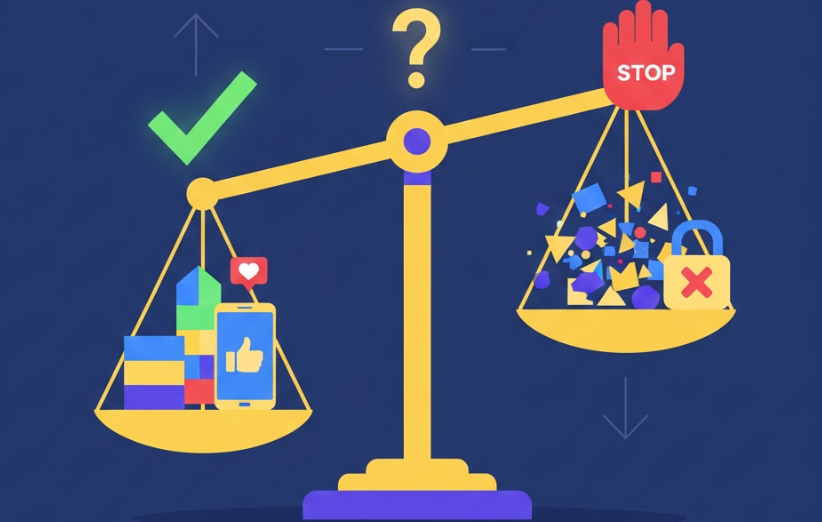
The legal question around SMM panels is more complicated than it first appears. The software or marketplace itself is not automatically unlawful simply because it sells social media services. But the type of engagement being sold, how it is generated, why it is purchased, how it is represented, the platform involved, and the country where the activity takes place can all change the legal analysis.
That means the useful question is not only “Is an SMM Panel Legal?” but also: legal for what use, under which law, and under which platform rules?
Is an SMM Panel Legal?
There is no single worldwide law that makes every SMM panel, every service sold through one, or every purchase from one automatically illegal.
An SMM Panel is fundamentally a platform for ordering social media-related services. Whether a particular transaction is lawful depends on what the service actually does and how it is used.
For example, purchasing a promotional service for visibility is not legally identical to buying bot-generated followers and then presenting those followers to customers, investors, advertisers, or business partners as proof of genuine commercial influence.
That second scenario can create much more serious legal problems because the issue is no longer simply “social media growth.” It may involve deception, false advertising, consumer protection, contractual misrepresentation, or other regulated conduct.
If you first want to understand exactly what these platforms sell and how they function, What Is an SMM Panel? provides the basic definition without mixing it with the legal question.
There Are Three Different Questions Hidden Inside “Legal”
1. Is the Activity Against the Law?
This means legislation, regulations, court-enforceable rules, consumer-protection law, fraud law, advertising law, or other legal obligations in the relevant jurisdiction.
2. Is the Activity Against the Platform's Rules?
Instagram, YouTube, TikTok, Twitch, Spotify and other platforms can prohibit certain forms of artificial or manipulated engagement under their own Terms even where no criminal statute specifically prohibits the purchase.
3. Is the Activity Misleading in a Commercial Context?
A business may create additional legal exposure when purchased metrics are used to mislead consumers, advertisers, sponsors, investors or commercial partners about genuine popularity, endorsement or influence.
These three layers are frequently confused. That confusion is one reason discussions about SMM panel legality become inaccurate very quickly.
Breaking Platform Rules Is Not Automatically the Same as Breaking the Law
Social platforms are private services that create their own Terms of Service, Community Guidelines and monetization policies. Those rules can be stricter than the law.
YouTube, for example, prohibits activity that artificially increases metrics such as views, likes, comments and subscribers. Its Fake Engagement Policy also warns creators that hiring another company does not remove responsibility: methods used by a hired promotion service can still lead to content removal, strikes or channel termination.
That is a platform-enforcement consequence. It does not automatically mean the user committed a crime.
This distinction is important when reading claims about whether an Is an SMM Panel Safe?, because account safety, platform compliance and legal compliance are separate questions.
When Can Buying Followers or Views Become a Real Legal Issue?
The clearest legal risks usually appear when artificial engagement becomes part of a deceptive commercial practice.
A notable example exists in the United States. The Federal Trade Commission's rule on fake reviews and testimonials specifically addresses fake indicators of social media influence, including followers and views.
The rule prohibits buying or selling fake social media indicators when the buyer knew or should have known they were fake and they are used to misrepresent influence or importance for a commercial purpose.
So it would be inaccurate to write that “buying followers is legal everywhere” or that “SMM panels only create Terms-of-Service risks.” In some jurisdictions and commercial situations, the activity can cross into enforceable law.
Businesses Have More to Think About Than Personal Accounts
A personal creator experimenting with a social metric and a company using social proof to sell products are not necessarily exposed to the same legal risks.
Businesses can be subject to consumer-protection and advertising rules about misleading claims, fake endorsements, reviews and commercial representations.
In the UK, for example, the Competition and Markets Authority states that businesses and creators must keep online reviews and endorsements genuine and transparent. UK guidance also prohibits fake-review practices and requires commercial endorsements to be clearly identified where applicable.
This means a company should be particularly cautious about using manipulated social proof in:
- Advertising claims
- Influencer rate negotiations
- Investor presentations
- Sales pitches
- Consumer testimonials or reviews
- Statements about popularity or customer adoption
- Regulated financial, medical or other high-trust marketing
The legal concern is often not the existence of the panel itself; it is what commercial claim is being made using the purchased metric.
What About Fake Reviews and Comments?
Reviews deserve separate treatment from simple follower or view counts because consumer reviews directly influence purchasing decisions.
Paying for fabricated customer reviews, commissioning fake testimonials, pretending to be a customer, or publishing reviews that falsely represent a genuine consumer experience can violate consumer-protection rules in some jurisdictions.
This is therefore materially different from purchasing a neutral visibility metric.
If a panel offers comments, reviews or other text-based engagement, businesses should consider whether that content would falsely communicate a real customer experience or endorsement.
Does It Matter How the Engagement Is Generated?
Yes. “SMM service” is too broad a category to make one legal judgment about every service.
Engagement could theoretically come from advertising, creator promotion, incentive systems, real users, automated accounts, compromised accounts, bots or other sources. Those sources can carry very different policy, security and legal implications.
The customer may not always know the underlying fulfillment source, which is why it is worth understanding How Do SMM Panels Work? and checking service descriptions rather than assuming every package operates in the same way.
Can Selling SMM Panel Services Be Legal?
Operating an SMM panel raises more legal considerations than simply placing an individual order.
A panel operator may need to think about business registration, taxes, payment processing, privacy and data protection, consumer refunds, advertising claims, sanctions or restricted jurisdictions, intellectual property, contractual terms and the legality of the particular services being sold.
In addition, a payment processor or hosting provider may have its own Acceptable Use Policy even when local law does not expressly prohibit the business model.
Anyone building a panel as a commercial operation should therefore separate the technical instructions in How to Start a SMM Panel? from jurisdiction-specific legal and compliance advice.
What About Reselling Someone Else's Services?
Reselling by itself is not automatically unlawful. Many legitimate industries operate through wholesalers, APIs and resellers.
The legal questions arise from the underlying product, the representations made to customers, contractual rights, local business rules and whether the reseller is facilitating conduct prohibited by applicable law.
In other words, changing the label from “provider” to “reseller” does not remove responsibility for what is actually being sold.
Can You Get Banned Even If You Have Not Broken a Law?
Absolutely.
This is probably the most practical distinction for ordinary users. A platform does not need to prove that you committed a crime before enforcing its own Terms.
Depending on the platform and conduct, possible consequences can include:
- Removal of artificial followers, views or likes
- Reduced distribution or invalidated metrics
- Demonetization
- Content removal
- Temporary restrictions
- Account suspension
- Permanent termination in serious or repeated cases
Anyone considering a provider should therefore evaluate both compliance and reliability rather than assuming a cheap service is automatically low-risk. How to Choose a Reliable SMM Panel? covers the provider-selection side separately.
Does the Same Answer Apply to Every Country?
No. This is one of the most important limitations of any general article about SMM panel legality.
Consumer-protection law, advertising law, fraud standards, data-protection requirements and rules surrounding online business practices differ between countries—and sometimes between states, provinces or other local jurisdictions.
The United States FTC rule mentioned above is a good example of why a blanket global statement would be misleading. A practice may be explicitly regulated in one country while addressed differently in another.
For a business campaign, paid influencer activity or substantial commercial use, jurisdiction-specific legal advice is more appropriate than relying on a generic blog post.
What If You Are Only Buying Followers for a Personal Account?
The commercial-deception risk may be lower when there is no business claim, consumer transaction or representation to advertisers. But that does not make the activity automatically compliant with the platform.
You still need to consider the specific platform's Terms and the source of the engagement.
The same distinction appears in platform-specific questions such as Is Buying Twitch Followers Illegal?: legality and platform permission are two different analyses.
A Practical Legal Checklist Before Using an SMM Panel
Before ordering, especially for a business account, ask:
- What exactly is being delivered?
- Does the social platform allow this type of engagement?
- Could the metric be artificial or bot-generated?
- Will I use the metric to make a commercial claim?
- Could customers, sponsors or investors interpret it as genuine influence?
- Does the service involve fake reviews or fabricated endorsements?
- Are there advertising or consumer-protection rules in my jurisdiction?
- Does my payment processor, advertiser or business partner prohibit the activity?
If the answer involves a high-value commercial transaction, regulated industry, customer deception or legal uncertainty, obtaining local legal advice is more appropriate than assuming that “everyone uses SMM panels, so it must be legal.”
The Legal Bottom Line
An SMM panel should not be classified as universally legal or universally illegal.
The platform itself is a type of software and marketplace. The legal exposure depends on the service, source of engagement, jurisdiction, purpose of the purchase and how the resulting metrics are represented.
Platform-policy violations are often the most immediate risk for ordinary social media accounts. But once fake engagement is used to mislead consumers or commercially misrepresent influence, the issue can move beyond Terms of Service and into actual consumer-protection or deception law.
That distinction is the safest and most accurate way to answer Is an SMM Panel Legal?